Platform
Platform games
77 games
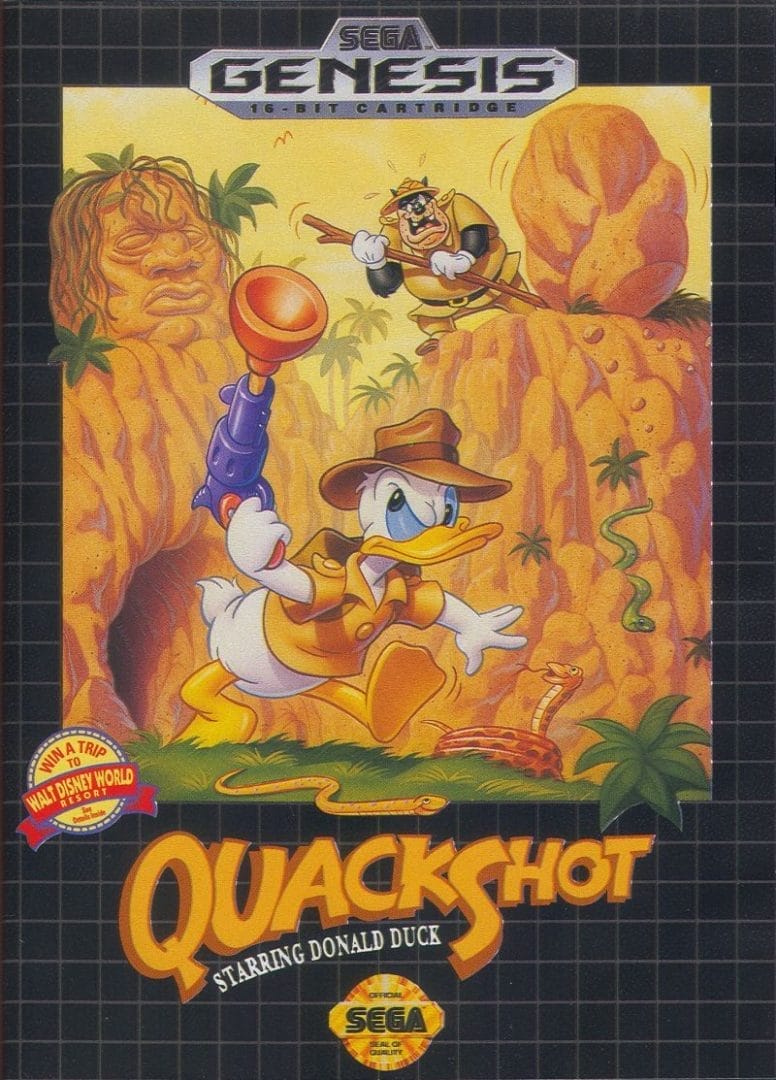
QuackShot Starring Donald Duck
QuackShot Starring Donald Duck, known in Japan as I Love Donald Duck: The Treasure of King Garuzia, is a 1991 platform game developed and published by Sega for the Sega Genesis. The player controls Donald Duck as he, alongside his three nephews Huey, Dewey and Louie, attempt to track down a lost artifact which was treasured by King Garuzia. The game was influenced by the Indiana Jones film series. QuackShot was released with a positive response from video game publications. The game was universally lauded for its graphics, with magazines like Sega Pro describing them as "some of the best graphics around", and the game was also praised for its music and puzzles. Adversely, the game was criticized for its overall difficulty and the controls in certain situations. Retrospectively, QuackShot was also criticized for its lack of speech samples by IGN.
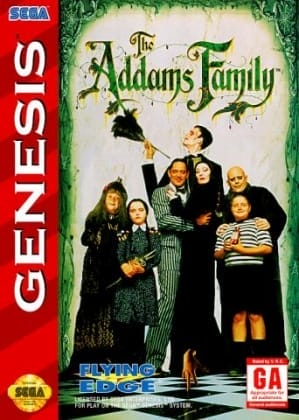
The Addams Family
The Addams Family is a 1992 action-adventure platform game based on the 1991 film of the same name. Developed and published by Ocean Software, it was released for home consoles such as the Super Nintendo Entertainment System, computers such as the Amiga, and handheld consoles such as the Game Boy. The player assumes the role of Gomez Addams. His mission is to rescue other members of the Addams family from the clutches of Abigail Craven, who, alongside The Judge and the family attorney Tully Alford, is attempting to seize the Addams' wealth. The game is non-linear, with the player moving throughout the mansion's many inside and outside areas, some of which are hidden. Enemies include bosses each holding a member of the Addams Family hostage, making them necessary to defeat. Power-ups, extra lives, and money are also obtainable.
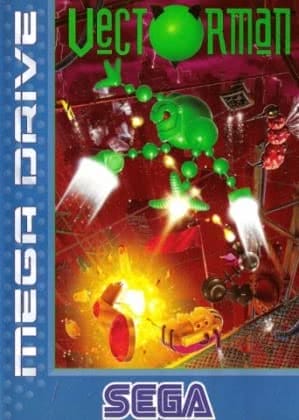
Vectorman
BlueSky Software's development relationship with Sega began in the early 1990s. After successfully developing and releasing Starflight and Joe Montana Football in 1991, BlueSky Software signed an exclusivity contract to develop video games for their Sega Genesis platform.#cite_note-Sega16Int-5) Sega won the bid for the rights to develop the official video game adaption of the film Jurassic Park, and chose BlueSky Software as the primary developer.#cite_note-6)#cite_note-VectoRetro-3) Sega published two of their Jurassic Park games; a video game adaption of the original Jurassic Park film "Jurassic Park (Sega video game)") released in 1993, and a sequel game, Jurassic Park: Rampage Edition, the following year, both for the Sega Genesis.#cite_note-VectoRetro-3) After completion of the two games, Sega turned to them to create a game centered around pre-rendered3D models in its levels and character designs, as an answer to Nintendo's popular 1994 release Donkey Kong Country.
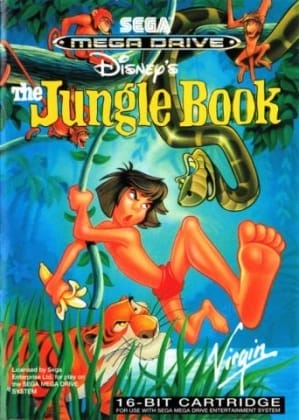
The Jungle Book
Disney's The Jungle Book is a series of platform video games based on the 1967 Disneyanimated film of the same name "The Jungle Book (1967 film)"). The game was released by Virgin Interactive Entertainment for the Game Boy, Nintendo Entertainment System, Master System, Genesis/Mega Drive, Game Gear, Super Nintendo Entertainment System, and MS-DOS. While gameplay is the same on all versions, technological differences between the systems forced changes – in some case drastic – in level design, resulting in six fairly different versions of the 'same' game. This article is largely based upon the Genesis/Mega Drive version. The player controls Mowgli, a young boy who has been raised by wolves. Mowgli must leave his home in the jungle and go back to the human village because Shere Khan, a tiger, is now hunting him. Mowgli must fight jungle wildlife and ultimately Shere Khan himself to reach his village.
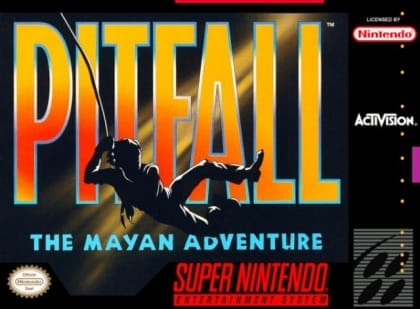
Pitfall: The Mayan Adventure
Pitfall: The Mayan Adventure is a 1994 action-platformvideo game developed by Activision in conjunction with Kroyer Films. The fourth installment in the Pitfall! franchise, players assume the role of Pitfall Harry Jr. as he embarks on a journey through the Mayan jungles of Central America in an attempt to rescue Pitfall Harry, his father and the protagonist of previous entries in the series, from the evil Mayan warrior spirit Zakelua. Its gameplay mainly consists of action and platforming mixed with stage-based exploration using a main six-button configuration. Pitfall: The Mayan Adventure began its development on the Super Nintendo Entertainment System and formed part in a string of planned franchise revivals by Activision along with other games from the Atari 2600 such as Kaboom! "Kaboom! (video game)") and River Raid.
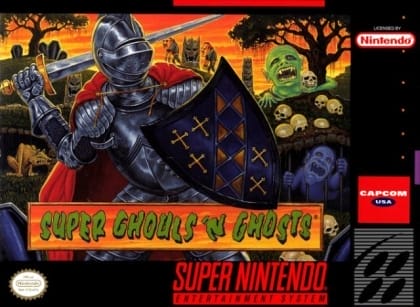
Super Ghouls 'n Ghosts
Super Ghouls 'n Ghosts, known as Chō Makaimura in Japan, is a 1991 platform video game developed and published by Capcom for the Super Nintendo Entertainment System. The third installment in the Ghosts 'n Goblins series and the first not to be released for arcades, it again depicts knight Arthur saving Princess Guinevere and the kingdom from Emperor Sardius, who has cast a spell that has revived the Ghoul Realm. The game has been included in multiple compilations of Capcom classics. A remake was released for the Game Boy Advance which features an additional game mode with new stages.
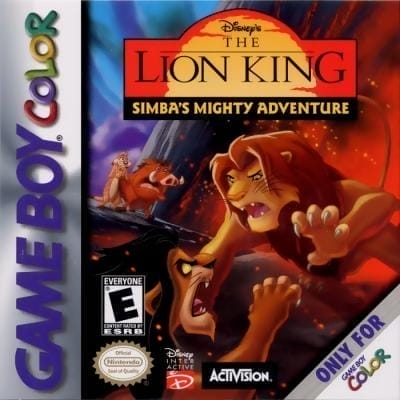
The Lion King: Simba's Mighty Adventure
The Lion King: Simba's Mighty Adventure is a 2000 platform game based on the 1994 animated film The Lion King. It was developed by Paradox Development for the PlayStation and by Torus Games for the Game Boy Color, and published by Activision. Unlike the previous The Lion King video game, it adhered more closely to the events in the film and the storyline carried on into the 1998 animated film The Lion King II: Simba's Pride, with Simba having to battle his evil uncle Scar, rescue his daughter Kiara (the protagonist from The Lion King II: Simba's Pride), and finally battle Zira. This game was the only console-based platform game to involve The Lion King II: Simba's Pride. All other games based on the title were educational or puzzle games and were released on the PC.
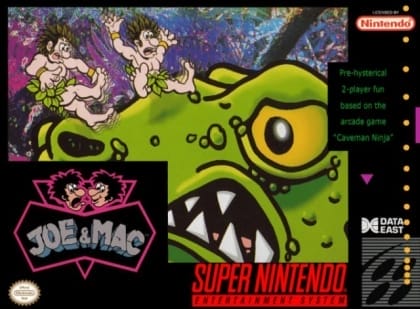
Joe & Mac
Joe & Mac, also known as Caveman Ninja or Caveman Ninja: Joe & Mac, is a 1991 run and gun "Run and gun (video game)")platform game developed and published by Data East for arcades. It was later ported to the Super Nintendo Entertainment System, MS-DOS, Amiga, Nintendo Entertainment System, Game Boy, Sega Genesis and Zeebo. The game stars the green-haired Joe and the blue-haired Mac, cavemen who battle through numerous prehistoric levels using weapons such as boomerangs, bones, fire, flints, electricity, stone wheels, and clubs "Club (weapon)"). The objective of the game is to rescue a group of women who were kidnapped by a rival tribe of cavemen. The game features a health system by which the player loses health over a period of time, apart from during boss battles. A two-player mode is available, and in some versions both characters are capable of damaging each other.
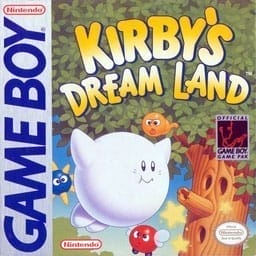
Kirby's Dream Land
Kirby's Dream Land is a 1992 platform game developed by HAL Laboratory and published by Nintendo for the Game Boy. It is the first game in the Kirby series and marks the debut of Kirby. It introduced many conventions that would appear in later games in the series. The game follows Kirby as he goes through five levels to retrieve the Sparkling Stars and food of Dream Land from King Dedede. Kirby's Dream Land was the debut game of designer Masahiro Sakurai. He intended it to be a simple game that could be easy to pick up and play by those unfamiliar with action games. For more advanced players, he offered additional optional challenges such as a hard mode and the ability to edit Kirby's maximum HP and starting number of lives. Kirby's Dream Land was re-released on the Nintendo 3DS via the Virtual Console in 2011; it is also one of the games included in the compilation game Kirby's Dream Collection for the Wii, released to celebrate the series' 20th anniversary.
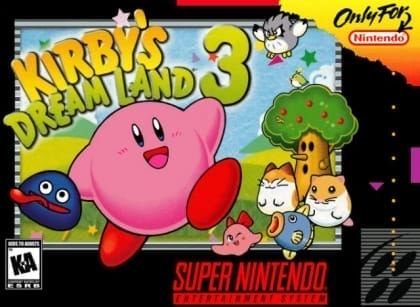
Kirby's Dream Land 3
Kirby's Dream Land 3 is a 1997 platform game developed by HAL Laboratory and published by Nintendo for the Super Nintendo Entertainment System. Starring Kirby, it is the fifth installment in the Kirby series "Kirby (series)") and the third game under the Kirby's Dream Land name. Although the first game was largely unrelated, Dream Land 3 features many similar characters to Dream Land 2. Dream Land 3 was followed by Kirby 64: The Crystal Shards in 2000. Kirby's Dream Land 3 was the last SNES game published by Nintendo in North America. Problems with the game's PAL conversion prevented it from being released in Europe and Australia for many years; it was eventually released for the Virtual Console in those regions in the form of an import from North America on July 24, 2009, for the Wii and on July 25, 2013, for the Wii U.
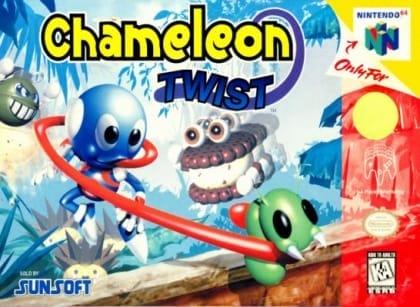
Chameleon Twist
Chameleon Twist is a 1997 video game developed by Japan System Supply, published by Japan System Supply in Japan, and published by Sunsoft in North America and Europe for the Nintendo 64. Though disliked by critics due to its easy gameplay, repetitive music, and awkward camera angles, Chameleon Twist was followed by a sequel titled Chameleon Twist 2. This 3D platform game has players take on the role of one of four anthropomorphic chameleons, and travel across six themed worlds. The chameleon's elongated tongue can be used as a weapon, a means to traverse gaps, or as a way to leap onto platforms. Once the tongue is unrolled, it can be guided in any direction using the analog stick. A five-room training area lets players practice the controls. The single-player game involves progressing through predominately indoor environments, each culminating in a boss battle, while collecting hearts to replenish health.
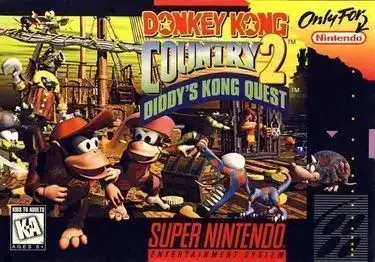
Donkey Kong Country 2: Diddy's Kong Quest
Donkey Kong Country 2: Diddy's Kong Quest is a 1995 platform game developed by Rare and published by Nintendo for the Super Nintendo Entertainment System (SNES). It was released on 21 November 1995 in Japan, 4 December in North America, and 14 December in Europe. It is the second installment of the Donkey Kong Country series and the sequel to Donkey Kong Country (1994). Players control Diddy Kong and his girlfriend Dixie Kong, who must rescue Donkey Kong after he is kidnapped by King K. Rool. The game is set on Crocodile Isle, with eight worlds of varying environments, totaling 52 levels. The game uses the same Silicon Graphics (SGI) technology from the original, which features the use of pre-rendered 3D imagery. Diddy's Kong Quest received acclaim and is regarded as one of the greatest 2D platformers of all time. Praise was directed at its graphics, gameplay, and soundtrack. It was the second best-selling game of 1995, and the sixth best-selling game on the SNES.
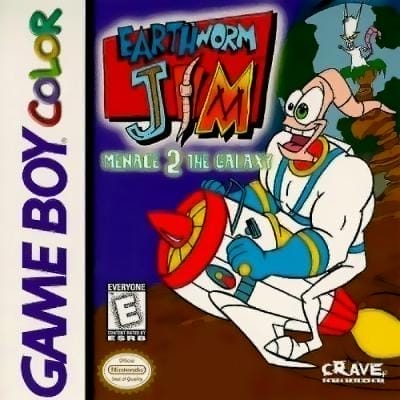
Earthworm Jim: Menace 2 the Galaxy
Earthworm Jim is a series of platform games featuring an earthworm named Jim who wears a robotic suit and battles the forces of evil. The series is noted for its platforming and shooting gameplay, surreal humor, and edgy art style. Four games were released in the series: Earthworm Jim "Earthworm Jim (video game)"), Earthworm Jim 2, Earthworm Jim 3D, and Earthworm Jim: Menace 2 the Galaxy, with the first game released in 1994. The series had lain dormant for almost a decade before Gameloft remade the original game in HD for PlayStation Network and Xbox Live Arcade in 2010. Interplay announced Earthworm Jim 4 in 2008; little to no information surfaced until May 2019 and August 2020, and development was believed cancelled by the rights owners by 2023, as it had never left pre-planning stages. Playmates Toys, finding success with the license for Teenage Mutant Ninja Turtles, wanted to start their own franchise.
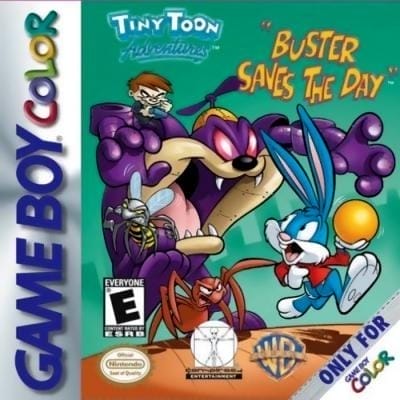
Tiny Toon Adventures: Buster Saves the Day
Tiny Toon Adventures: Buster Saves the Day is the first Tiny Toon Adventures game released on the Nintendo Game Boy Color. It was released on June 29, 2001, in Europe and July 27 in United States and was developed by Warthog and published by Conspiracy Games in North America and Swing! Entertainment in Europe.
Tiny Toon Adventures 2: Montana's Movie Madness
Tiny Toon Adventures: Montana's Movie Madness (released in Japan as Tiny Toon Adventures 2: Buster Bunny no Kattobi Daibouken) is the second Tiny Toon Adventures game released on the Nintendo Game Boy. It was released in 1993 and was developed and published by Konami.
Tiny Toon Adventures - Babs' Big Break
Tiny Toon Adventures: Babs' Big Break is the first Tiny Toon Adventures game released on the Nintendo Game Boy. It was released in 1992 and was developed and published by Konami.
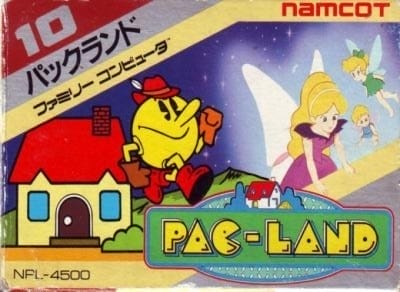
Pac-Land
Pac-Land is a 1984 platform game developed and published by Namco for arcades. It was released in North America by Bally Midway, and in Europe by Atari Games. Controlling Pac-Man "Pac-Man (character)"), the player must make it to the end of each stage to return a lost fairy back to its home in Fairyland. Pac-Man will need to avoid obstacles, such as falling logs and water-spewing fire hydrants, alongside his enemies, the Ghost Gang. Eating large flashing Power Pellets will cause the ghosts to turn blue, allowing Pac-Man to eat them for points. Pac-Land was conceptualized by Namco Research and Development 1 programmer Yoshihiro Kishimoto, who was tasked with creating an arcade game based on the American Pac-Man cartoon television series "Pac-Man (TV series)") by Hanna-Barbera. The backgrounds were made to be vibrant and colorful, and the characters to be detailed and move smoothly to match the show's animation style.
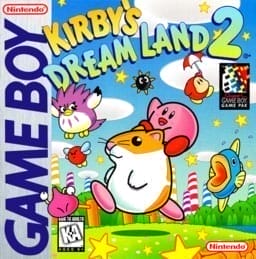
Kirby's Dream Land 2
Kirby's Dream Land 2 is a 1995 platform game developed by HAL Laboratory and published by Nintendo for the Game Boyhandheld video game console. It was released in Japan on March 21, 1995, in North America on May 1, 1995, in Europe on July 31, 1995, and in Australia on November 22, 1995. Kirby's Dream Land 2 continues the adventures of Kirby from Kirby's Dream Land and Kirby's Adventure, adding three animal friends to aid Kirby in battle. It can be played on the Super Game Boy, and gives slight changes to the game, such as adding a custom color scheme, a special game border, and a few new sound effects. The game was re-released on the 3DS'sVirtual Console in Japan on February 15, 2012, in PAL regions on May 17, 2012, and in North America on August 1, 2013. Kirby's Dream Land 2 is also included in Kirby's Dream Collection for the Wii. The plot follows Kirby, a resident of Dream Land.
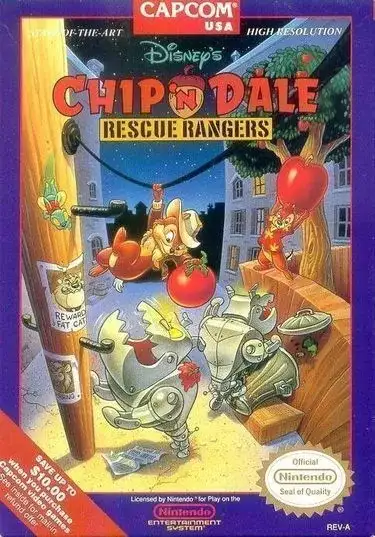
Chip 'n Dale: Rescue Rangers
Chip 'n Dale Rescue Rangers is a platform video game developed and published by Capcom for the Nintendo Entertainment System. It is based on the Disney animated series of the same name. It was released in North America and Japan in 1990, and Europe in 1991. An arcade version was released by Nintendo in 1990. It sold approximately 1.2 million copies worldwide. The game was included in The Disney Afternoon Collection compilation for PlayStation 4, Windows, and Xbox One released in April 2017.
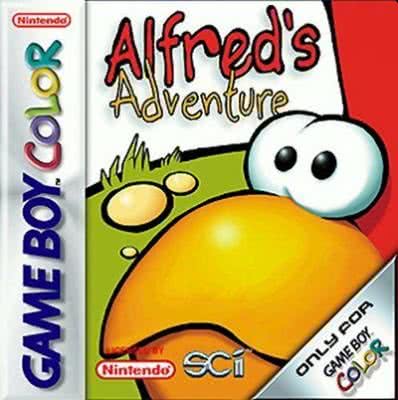
Alfred's Adventure
Alfred Chicken is a platform video game developed by Twilight and published by Mindscape for the Game Boy. It was later ported to the Amiga, Amiga CD32, NES, and Super NES in 1993 and February 1994, in Europe and North America, respectively. A Europe-exclusive remake of the game, entitled Alfred's Adventure, was developed by Möbius Entertainment and released by SCi for Game Boy Color in June 2000. Another remake, named Alfred Chicken, was also developed by King Monkey, a division of Möbius Entertainment, and released by Sony Computer Entertainment for PlayStation in 2002. Rockstar Games does not own the title's rights, despite buying Möbius later on, as Jason McGann personally held the rights.
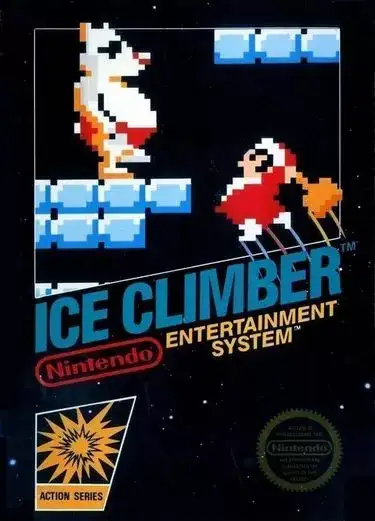
Ice Climber
Ice Climber is a 1985 platformvideo game developed and published by Nintendo. It was released for both the arcadeVS. System and the Famicom/Nintendo Entertainment System console. The main protagonists, Popo and Nana, collectively known as the Ice Climbers, scale 32 vertically scrolling, ice-covered mountains to recover stolen vegetables from a giant condor. In some European countries, Ice Climber was bundled with the Nintendo Entertainment System. The arcade expansion, VS. Ice Climber, features exclusive content from the traditional NES release; including an animated title screen "Title screen (gaming)"), a stage select menu at the start of the game and between levels, 16 more mountains, occasional blizzard and wind effects, more enemies and vegetables, and bonus multiplier items "Item (gaming)"). Popo and Nana are playable characters in the Super Smash Bros. series, starting with the 2001 game, Super Smash Bros. Melee for the GameCube.
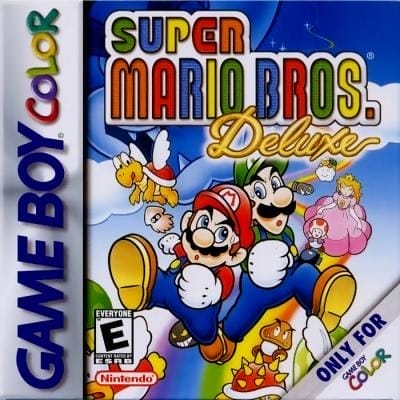
Super Mario Bros. Deluxe
Super Mario Bros. Deluxe (also known as Super Mario Bros. DX) is a 1999 platform game developed and published by Nintendo for the Game Boy Color. It is a largely unaltered port of the 1985 Super Mario Bros., originally released for the Nintendo Entertainment System (NES), with an unlockable version of its 1986 Japanese sequel, Super Mario Bros.: The Lost Levels. The game also introduces several new features, including a single-player and two-player race mode, a challenge mode for individual levels, and various toys and collectibles, some of which utilize the functionality of the Game Boy Printer. Upon release, Super Mario Bros. Deluxe received widespread acclaim. Critics praised its faithful adaptation of Super Mario Bros. on the Game Boy Color, as well as the additional gameplay modes and features, with minor criticism directed at the gameplay effects of the smaller screen size compared to the NES.
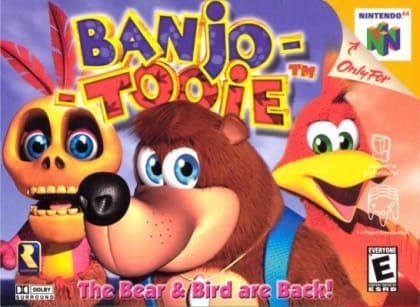
Banjo-Tooie
Banjo-Tooie is a 2000 platform game developed by Rare and published by Nintendo for the Nintendo 64 console. It is the second game in the Banjo-Kazooie series and the sequel to Banjo-Kazooie "Banjo-Kazooie (video game)"). The game follows the returning protagonists Banjo and Kazooie as they attempt to stop the plans of the witch Gruntilda and two of her sisters, who intend to vaporise the inhabitants of the game's island setting. The game features worlds "Level (video games)") significantly larger than those of its predecessor, requiring the player to complete challenges such as solving puzzles, jumping over obstacles, collecting items, and defeating opponents. It also includes a Widescreen format, and a multiplayer mode in which up to four players can compete in several minigames repurposed from the main campaign. Development of the game started in June 1998, directly after the release of its predecessor.
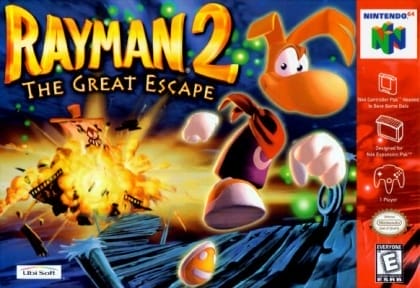
Rayman 2: The Great Escape
Rayman 2: The Great Escape is a 1999 platform game developed by Ubi Pictures and published by Ubi Soft for the Nintendo 64, Windows, Dreamcast and PlayStation. The game centers on the titular character Rayman, who is tasked with saving the fantastical land of the Fairy Glade from an army of robotic pirates led by Admiral Razorbeard. An enhanced port titled Rayman Revolution was developed by Ubi Soft Annecy for the PlayStation 2, and released in 2000. An alternative remake known as Rayman 2 Forever was developed by Ubi Studios for the Game Boy Color. Rayman 2 was critically acclaimed for its gameplay, graphics and accessibility.
Browse our collection of 77 Platform retro games, all playable instantly in your browser. No download required. Play classic games online in your browser and save your progress anytime.