All Games
456 games
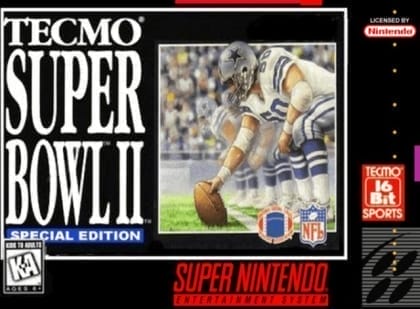
Tecmo Super Bowl II - Special Edition
Tecmo Super Bowl II (テクモスーパーボウルII スペシャルエディション) is an update of the previous Tecmo Super Bowl released for Super NES and Genesis.
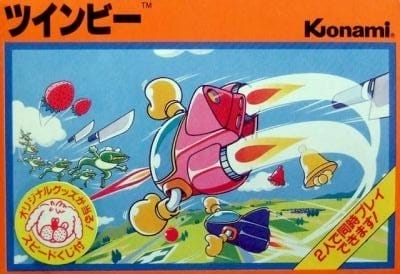
TwinBee
TwinBee is a 1985 vertically scrolling shooter video game developed and published by Konami for arcades. Along with Sega's Fantasy Zone (1986), it is credited as an early archetype of the "cute 'em up" subgenre. It was the first game to run on Konami's Bubble System hardware. TwinBee was ported to the Family Computer and MSX in 1986, and has been included in numerous compilations released in later years. The original arcade game was released outside Japan for the first time as part of the Nintendo DS compilation Konami Classics Series: Arcade Hits. A mobile phone version with edited graphics was released for Japanese i-mode mobile phones in 2003. Various TwinBee sequels were released for the arcade and home console markets following the original game, some of which spawned audio drama and anime adaptations in Japan.

Antarctic Adventure
Antarctic Adventure (けっきょく南極大冒険, Kekkyoku Nankyoku Daibōken; lit. "Actually Antarctic Big Adventure") is a video game developed by Konami in 1983 for the MSX, and later for video game consoles, such as the Family Computer and ColecoVision. The player takes the role of an Antarctic penguin, racing to various research stations owned by different countries in Antarctica (excluding the USSR). The gameplay is similar to Sega's Turbo, but plays at a much slower pace, and features platform game elements. The penguin, later named Penta, must reach the next station before time runs out while avoiding sea lions and breaks in the ice. Throughout the levels, fish jump out of ice holes and can be caught for bonus points. The game, like many early video games, has no ending – when the player reaches the last station, the game starts from the first level again, but with increased difficulty.
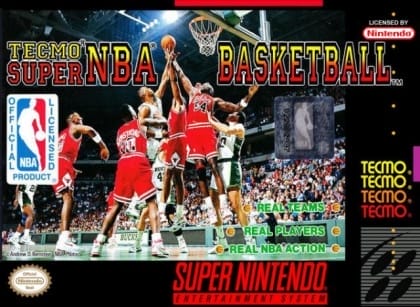
Tecmo Super NBA Basketball
Tecmo Super NBA Basketball (テクモスーパーNBAバスケットボール) is a basketball video game developed by Sculptured Software for the Super NES. The game is the SNES equivalent of the original Tecmo NBA Basketball. It also came out a year later (with updated rosters) for the Sega Genesis.
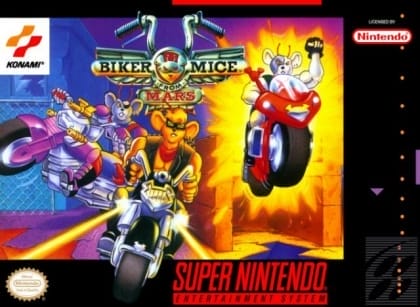
Biker Mice from Mars
Biker Mice From Mars is a racing video game released by Konami for the Super Nintendo Entertainment System. It is a tie-in to the animated series of the same title. The PAL version of the game features in-game product placement for Snickers candy bars.
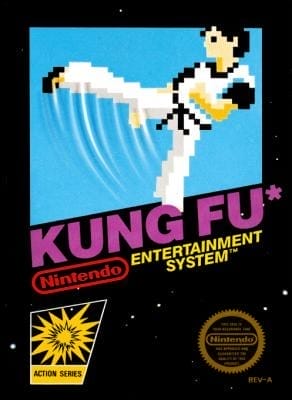
Kung Fu
Kung-Fu Master, known as Spartan X[b] in Japan, is a 1984 beat 'em up game developed and published by Irem for arcades. It was distributed by Data East in North America. Designed by Takashi Nishiyama, the game was based on Hong Kong martial arts films. It is a loose adaptation of the Jackie Chan, Sammo Hung and Yuen Biao film Wheels on Meals (1984), called Spartan X in Japan. The protagonist Thomas is named after Jackie Chan's character in the film. It is also heavily inspired by the Bruce Lee film Game of Death (1972), which was the basis for the game's concept. Nishiyama, who had previously designed the side-scrolling shooter Moon Patrol (1982), combined fighting elements with a shoot 'em up gameplay rhythm. Irem and Data East exported the game to the West without the Spartan X license. The game was a major commercial success, topping the Japanese arcade charts and becoming America's second highest-grossing arcade game of 1985, while receiving critical acclaim for its fast-paced, side-scrolling gameplay and detailed, colorful graphics. A port for the Nintendo Entertainment System (known as the Famicom in Japan) was developed by Nintendo under the direction of Shigeru Miyamoto, released as Spartan X in Japan and Kung Fu in the West, selling 3.5 million copies worldwide. It was also one of the top five best-selling Commodore 64 games of 1986. It spawned the sequel Spartan X 2 (1991) and the spiritual successors Trojan (1986) and Vigilante (1988).
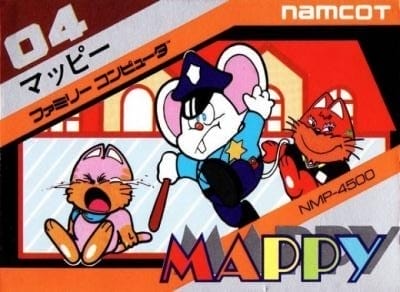
Mappy
Mappy is a 1983 platformvideo game developed and published by Namco for arcades. It was released in Japan in March 1983 and in North America by Bally Midway in April 1983. It runs on Namco's Super Pac-Man hardware modified to support horizontal scrolling. The name "Mappy" is likely derived from mappo (マッポ), a slightly pejorative Japanese slang term for policeman. The game has been re-released in several Namco arcade compilations. It spawned a handful of sequels and a 2013 animated web series developed by cartoonists Scott Kurtz and Kris Straub. Controls consist of a two-position joystick and a button. The player assumes the role of Mappy, a police mouse tasked with recovering stolen items from a mansion that serves as a hideout for a gang of thieving cats. Goro (Nyamco in Japanese), large and red, is the leader, while the smaller blue Meowky cats (Mewky in Japanese) are his underlings.
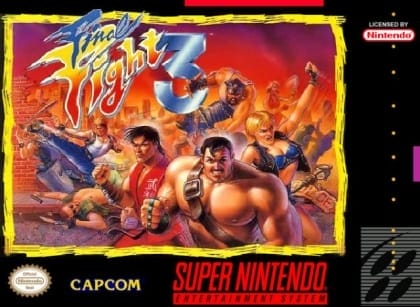
Final Fight 3
Final Fight 3, released in Japan as Final Fight Tough (Japanese: ファイナルファイト タフ, Hepburn: Fainaru Faito Tafu), is a 1995 beat 'em up video game developed and published by Capcom for the Super Nintendo Entertainment System. It is the second sequel to Final Fight released for the Super NES, following Final Fight 2. Like its predecessor, it was produced by Capcom's consumer division with no preceding arcade version released. The game features the return of the protagonist Guy along with Haggar and also introduces new characters Lucia and Dean. The game's plot takes them through their efforts to rid Metro City of the new Skull Cross gang. Final Fight 3 introduced new moves, as well as branching paths during gameplay and multiple endings. Also available is the option to fight alongside a CPU-controlled partner. However, most critics felt these changes did too little in the way of expanding and improving upon the original Final Fight, and the game was released to little fanfare.
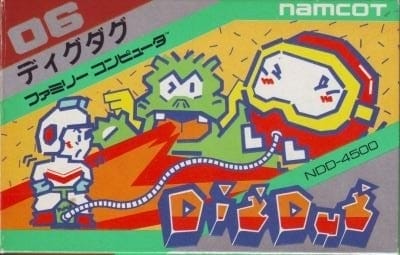
Dig Dug
Dig Dug is a 1982 maze video game developed and published by Namco for arcades. It was released by Atari, Inc. in North America. The player digs underground tunnels to attack enemies in each level, by either inflating them to bursting or crushing them underneath rocks. Dig Dug was planned and designed by Masahisa Ikegami with help from Galaga creator Shigeru Yokoyama. It was programmed for the Namco Galaga arcade board by Shouichi Fukatani, who worked on many of Namco's earlier arcade games, along with Toshio Sakai. Music was composed by Yuriko Keino, including the character movement jingle at executives' request, as her first Namco game. Namco heavily marketed it as a "strategic digging game". Upon release, Dig Dug was well received by critics for its addictive gameplay and kawaii character design. During the golden age of arcade video games, it was globally successful, including as the second highest-grossing arcade game of 1982 in Japan.
Magic Jewelry
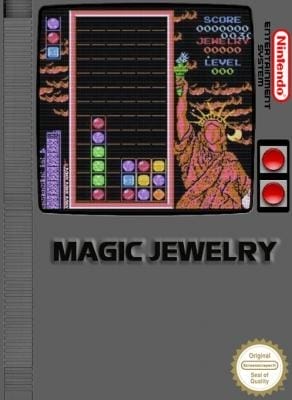
Hwang Shinwei (Chinese: 黃信維; pinyin: Huángxìnwéi), sometimes romanized as Huang Hsin-Wei or Huang Xinwei, is a Taiwanese video game programmer. From 1988 to 1991, he developed video games for the NES without a license from Nintendo, which were mostly published by RCM Co., Ltd. (also known as RCM Group or simply RCM, standing for RamCo Man International (Chinese: 劍虹國際有限公司)). Though some of Hwang's titles are originals. most are clones of popular games, many of which were not originally ported to the NES (such as Rally-X). All of these games were released on various multicarts, but several, like Brush Roller and Magic Jewelry, were also released on standalone cartridge format. Though standalone games and multicarts produced by RCM and other companies with ties to Hwang often had copyright information listed, cartridges produced by unrelated companies usually had their copyright information removed, even on single release cartridges.
Circus Charlie
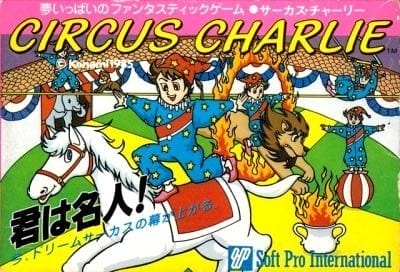
Circus Charlie is a 1984 actionvideo game developed and published by Konami for arcades. It was released in North America by Centuri in March 1984 and in Japan in April 1984. The player controls a circus clown named Charlie in six different circus-themed minigames. It was released for MSX in the same year, followed by ports to the Famicom in 1986 by Soft Pro and the Commodore 64 in 1987. In the game there are six regular stages "Level (video gaming)") (plus an extra stage) of differing tasks that are to be completed by Charlie. Grabbing money bags, performing dangerous tricks, avoiding enemies, completing stages, etc., earns Charlie points "Score (gaming)"). After the sixth stage is completed, the game starts over again but with a faster pace and more difficult (but exactly the same in terms of task to be completed) levels. Charlie also races against time. Bonus points are awarded according to the time remaining, but running out of time will cost the player a life.
Mighty Morphin Power Rangers: The Fighting Edition
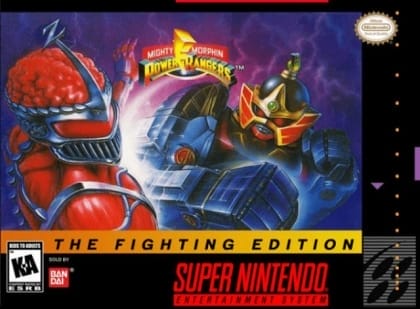
Mighty Morphin Power Rangers: The Fighting Edition is a 2D competitive fightingvideo game based on the Mighty Morphin Power Rangers television series that was released exclusively for the Super Nintendo Entertainment System developed by Natsume Co., Ltd. and published by Bandai in 1995. Unlike previous Power Rangers video games, which had the player controlling the titular heroes, the player controls their giant robots (known as Zords) in this title. A bootleg Genesis port is known to exist, though who actually made it is currently unknown.
Prince of Persia
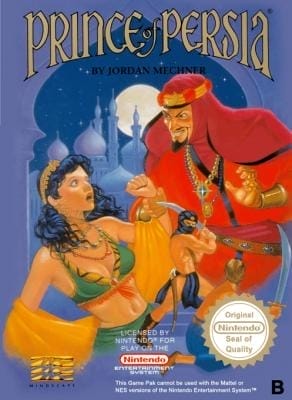
Mechner enrolled in New York University's film department, producing an award-winning short film during his time there, before returning to design and direct a sequel to the original game. The sequel, Prince of Persia 2: The Shadow and the Flame, was developed internally at Broderbund with Mechner's supervision. The game, like its predecessor, received critical acclaim and high sales. Broderbund was subsequently purchased by The Learning Company, which was later acquired by US game company Mattel Interactive. In 1999, Prince of Persia 3D was developed and released under Broderbund's Red Orb label. Released for PC and the Dreamcast only, it was criticized by many users as being buggy, and was a commercial disappointment. The Broderbund/Learning Company's games division, the assets of which included the Prince of Persia franchise, was subsequently sold to Ubisoft.
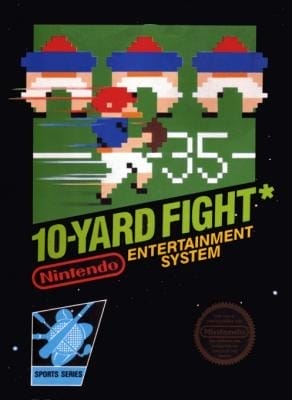
10-Yard Fight
10-Yard Fight is a 1983 American footballvideo game developed and published by Irem for arcades. It was released by Taito in North America, Electrocoin in Europe, and ADP Automaten in West Germany. A port developed by Tose for the Nintendo Entertainment System was released in 1985 by Irem in Japan and Nintendo internationally. 10-Yard Fight is viewed in a top-down perspective and is vertical scrolling. The player does not select plays for either offense or defense. On offense, the player simply receives the ball upon the snap and either attempts to run with the quarterback, toss the ball to a running back, or throw the ball to the long distance receiver, essentially the option offense. On defense, the player picks one of two players to control, and the computer manipulates the others. The ball can also be punted "Punt (gridiron football)") or a field goal "Field goal (football)") can be attempted.
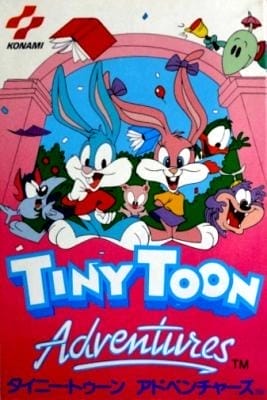
Tiny Toon Adventures
Tiny Toon Adventures is a platform video game for the NES. It was developed and published by Konami and released in 1991. It is the first Tiny Toon Adventures video game to be released for a video game console.
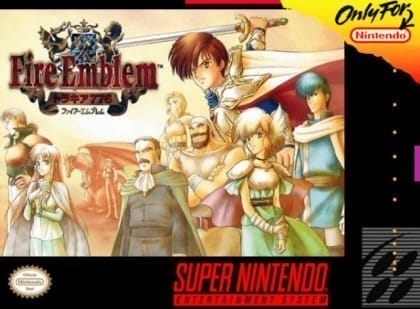
Fire Emblem: Thracia 776
Fire Emblem: Thracia 776 is a tactical role-playing game developed by Intelligent Systems and published by Nintendo for the Super Famicom; it was originally released through the Nintendo Power flash cartridge "Nintendo Power (cartridge)") in 1999, then on a ROM cartridge the following year. It is the fifth installment in the Fire Emblem series, the third and last title to be developed for the Super Famicom, and the last home console Fire Emblem until the release of Fire Emblem: Path of Radiance in 2005. Thracia 776 takes place on the continent of Jugdral. Set in the generational gap within Fire Emblem: Genealogy of the Holy War, the story follows main protagonist Leif as he rallies a private army in an attempt to defeat the ruling Grannvale Empire and restore his lost kingdom of Thracia.
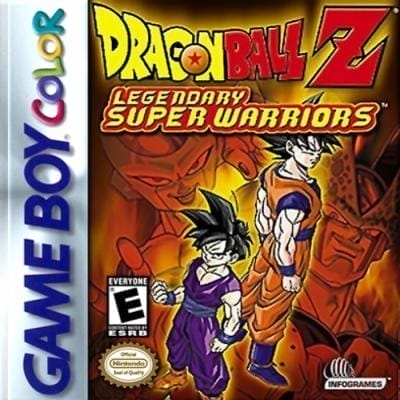
Dragon Ball Z: Legendary Super Warriors
Dragon Ball Z: Legendary Super Warriors is a turn-based fighting game released for the Game Boy Color. It is played with the use of in-game cards for attacks, techniques and support items. The game's story takes place from the start of Dragon Ball Z, the Saiyan Saga, and runs until the end of the Buu Saga. The game includes two extra stories involving Future Trunks's timeline. Once the game has been completed, the player can replay the story mode or battle modes the game has with the freedom to use any characters and forms they choose in any of the given battles. During the player's second playthrough, they may be able to unlock additional characters if certain criteria are met.
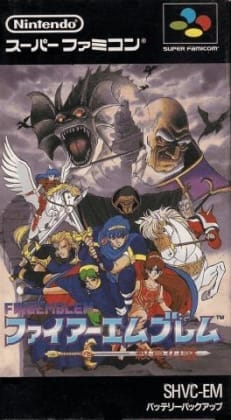
Fire Emblem: Mystery of the Emblem
Fire Emblem: Mystery of the Emblem, known in Japan as Fire Emblem: Monshō no Nazo, is a 1994 tactical role-playing video game developed by Intelligent Systems and published by Nintendo for the Super Famicom. It is the third installment of the Fire Emblem series, and the first to be developed for the Super Famicom. The story is divided into two parts: the first is a retelling of Fire Emblem: Shadow Dragon and the Blade of Light, while the second is an original story acting as a sequel to the first game. After defeating the sorcerer Gharnef and the Dark Dragon Medeus, peace is restored to Archanea and Marth restores his kingdom. His ally Hardin ascends to the throne of Archanea, but begins hostile military expansion across the continent, forcing Marth to confront his old friend and the force driving him. Gameplay follows the traditional Fire Emblem system of tactical battles taking place on grid-based maps.
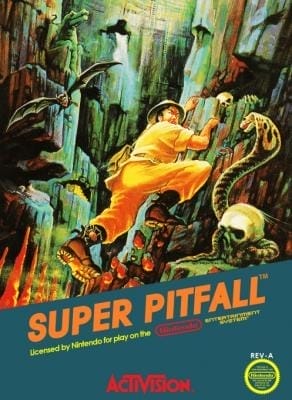
Super Pitfall!
Super Pitfall is a 1986 side-scrolling non-linear platform game for the Nintendo Entertainment System (NES). Despite the title screen stating that it was reprogrammed by Pony Inc., the development of the NES version was handled by Micronics, a Japanese developer who mostly ported arcade games to the NES. Super Pitfall was the first game that Activision published as a third-party developer for the NES. Following the original release of the game, ports were made in Japan by Makoto Ichinoseki for the PC-8800 series liner of computers and by Steve Bjork for the Color Computer 3. The game initially received positive reviews from VideoGames & Computer Entertainment and Computer Entertainer while Bill Kunkel wrote in Computer Gaming World that the game did not control well and did not stand out well in a market of Super Mario Bros. clones.
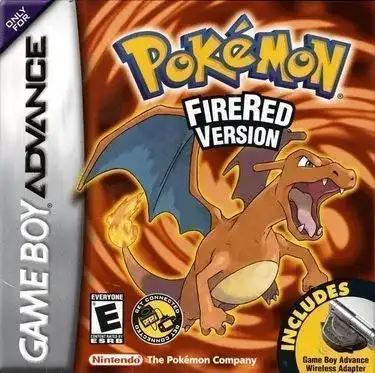
Pokémon Fire Red
As with almost all Pokémon role-playing games released for handheld consoles, FireRed and LeafGreen are in a third-person, overhead perspective. The main screen is an overworld, in which the player navigates the protagonist. Here, a menu interface may be accessed, in which the player may configure their Pokémon, items, and gameplay settings. When the player encounters a wild Pokémon or is challenged by a trainer, the screen switches to a turn-based battle screen that displays the player's Pokémon and the engaged Pokémon. During a battle, the player may select a move for their Pokémon to perform, use an item, switch their active Pokémon, or attempt to flee (in wild battles only). All Pokémon moves have power points (PP); when a Pokémon tries to perform a move while awake, the move's PP is reduced by 1. When the PP of a move hits zero, the Pokémon is not able to use that move.
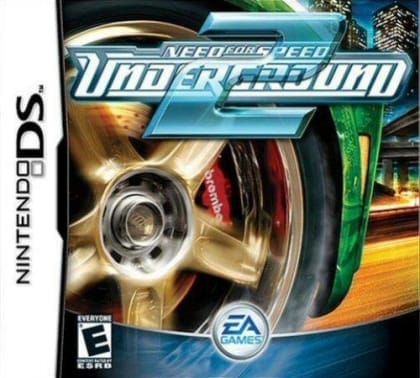
Need for Speed: Underground 2
Need for Speed: Underground 2 is a 2004 racing video game developed by EA Black Box and published by Electronic Arts. It is the eighth installment in the Need for Speed series and the direct sequel to Need for Speed: Underground. It was developed for Windows, GameCube, PlayStation 2, and Xbox. Game Boy Advance and Nintendo DS versions were developed by Pocketeers. Another version for mobile phones was also developed by Ideaworks Game Studio. Like its predecessor, it was also commercially successful, selling around 11 million copies worldwide and breaking sales records in the United Kingdom. The game entails tuning cars for street races, resuming the Need for Speed: Underground storyline. Need for Speed: Underground 2 provides several new features, such as broader customization, new methods of selecting races, set in a city known as Bayview.
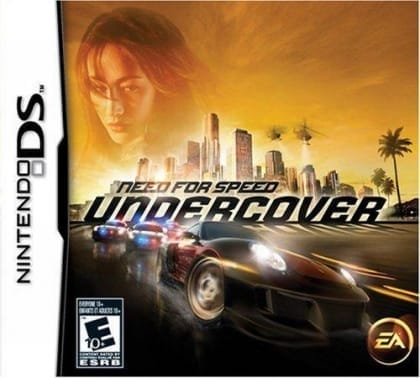
Need for Speed: Undercover
Need for Speed: Undercover is a 2008 racing video game, and is the twelfth installment in the Need for Speed series following Need for Speed: ProStreet (2007). Developed by EA Black Box and published by Electronic Arts, it was released on November 18, 2008, for the PlayStation 2, PlayStation 3, Xbox 360, Wii, Microsoft Windows, PlayStation Portable, Nintendo DS, and then on a number of mobile phone platforms in 2009. The game sees players conducting illegal street races within the fictional Tri-City Area, with the main mode's story focused on the player operating as an undercover police officer to investigate links between a criminal syndicate, stolen cars, and street racers. Gameplay operates on the same manner as previous entries such as Need for Speed: Most Wanted and Need for Speed: Carbon, now including a larger selection of licensed real-world cars, and RPG-styled system in the game's main story mode.
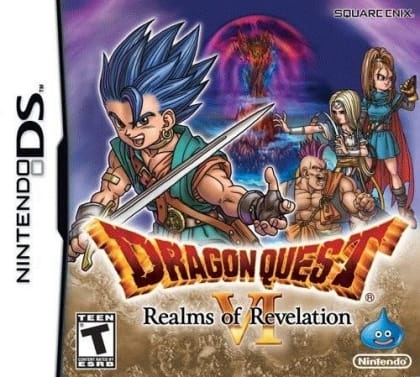
Dragon Quest VI: Realms of Revelation
Dragon Quest VI: Realms of Revelation, known in Europe & Australia as Dragon Quest VI: Realms of Reverie, is a 1995 role-playing video game developed by Heartbeat and published by Enix for the Super Famicom as a part of the Dragon Quest series and as the last Dragon Quest game in the Zenithian Trilogy. It was released in Japan in December 1995, developed by Heartbeat; whereas the previous Dragon Quest games were developed by Chunsoft. In 2011, a remake of the game, along with Dragon Quest IV and Dragon Quest V, was released worldwide for the Nintendo DS, making this the first time the game was released in English. Another version of the game for Android and iOS devices was released in Japan in June 2015. As the sixth installment to the Dragon Quest series, the graphics and gameplay remain close to the other games, with minor additions and upgrades.
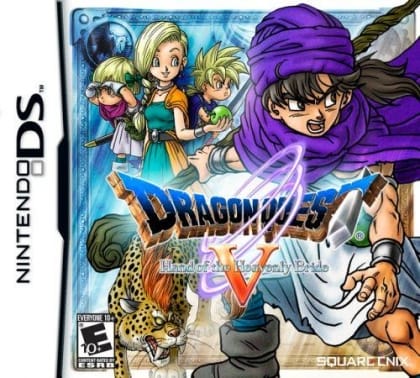
Dragon Quest V: Hand of the Heavenly Bride
Dragon Quest V: Hand of the Heavenly Bride, known in Europe as Dragon Quest: The Hand of the Heavenly Bride and in Japan as Dragon Quest V: Bride of Heaven, is a 1992 role-playing video game developed by Chunsoft and published by Enix for the Super Famicom. The fifth main installment in the Dragon Quest series, the game was the first title in the franchise to not be initially localized in North America due to programming issues. It later had an enhanced remake only in Japan for the PlayStation 2 in 2004. The remake was developed by ArtePiazza and Matrix Software. Another remake was made for the Nintendo DS, which was released in Japan in July 2008 and worldwide in February 2009; this marks the first time the game had officially released in English. In addition, ports for Android and iOS were released in Japan in December 2014, and worldwide the following month.
Browse our collection of 456 Games retro games, all playable instantly in your browser. No download required. Play classic games online in your browser and save your progress anytime.