All Games
456 games
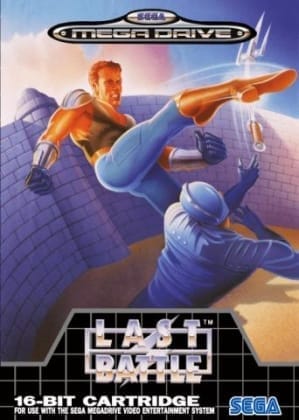
Last Battle
Last Battle: Legend of the Final Hero is a side-scrollingmartial artsbeat 'em up released for the Mega Drive/Genesis in 1989 by Sega. It was one of the six games that were available as part of the Genesis launch lineup in the U.S. The Japanese version, titled Hokuto no Ken: Shinseikimatsu Kyūseishu Densetsu (北斗の拳 新世紀末救世主伝説; lit."Fist of the North Star: The New Legend of the Post-Apocalyptic Messiah"), is based on the manga and anime series Fist of the North Star (Hokuto no Ken in Japanese). Since the international version did not retain the Hokuto no Ken license, the graphics and characters' names were altered. It was the second Hokuto no Ken game released by Sega, following the Mark III original, released internationally as Black Belt "Black Belt (1986 video game)"). Versions for the Commodore 64 and Amiga based upon Last Battle were developed and released by Elite in Europe in 1991. Last Battle is a side-scrolling action game similarly to its predecessor Black Belt.
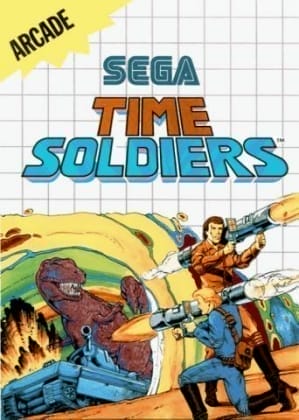
Time Soldiers
Time Soldiers, known in Japan as Battle Field (バトル フィールド), is a 1987 run and gun video game developed by Alpha Denshi "ADK (company)") for arcades and published by SNK. It was distributed in North America by Romstar. A Master System version was also produced, as well as versions titled Time Soldier for the Amiga, Commodore 64, and Atari ST. Time Soldiers can be played by either a single-player, or by two players simultaneously. Players move their characters with an eight-way rotary joystick, shooting enemies along a scrolling backdrop. The rotary joystick allows players to walk in one of eight directions while shooting in any of twelve directions. These controls are similar to the SNK-developed Ikari Warriors (1986) which allowed the player to walk and rotate in eight directions. The plot involves the protagonists traveling through time to rescue their comrades from the villainous Gylend.
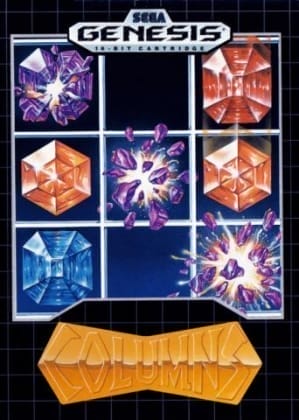
Columns
Columns was the first pack-in game for the Game Gear. This version was slightly different from the Genesis version, and its soundtrack was transposed and rearranged due to limitations of the handheld's sound chip. While the columns themselves were updated for the Genesis version, the overall decoration was less like a cartoon in the Game Gear version and instead more artistically designed. Lastly, the Game Gear version had a feature that let the player change the jewels to fruit, squares, dice, or playing card suits (clubs, diamonds, spades, and hearts). In 1990, Compile and Telenet Japan developed and published an MSX2 version. In November 2006, Columns was released as part of the game Sega Genesis Collection for the PlayStation 2, and later for PlayStation Portable. The same year on December 4, it was released on Nintendo's Virtual Console for Wii. It is also included on Sonic's Ultimate Genesis Collection for the PlayStation 3 and Xbox 360.
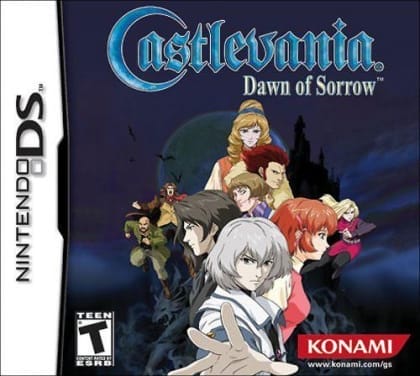
Castlevania: Dawn of Sorrow
Castlevania: Dawn of Sorrow is a 2005 action role-playing game developed and published by Konami. It is part of Konami's Castlevania video game series and the first Castlevania game released on the Nintendo DS. The game is the sequel to Castlevania: Aria of Sorrow and incorporates many elements from its predecessor. Dawn of Sorrow continues the story of Aria of Sorrow: Dracula has been defeated, with his powers assumed by his reincarnation, Soma Cruz. With the help of his allies, Soma avoids becoming the new dark lord. A cult forms to bring forth a new one by killing Soma. Soma and his allies move to ensure that does not happen. Dawn of Sorrow incorporates many features from earlier Castlevania games: the combination of elements from platform games and role-playing video games, the "Tactical Soul" system featured in Aria of Sorrow and a dark, gothic atmosphere.
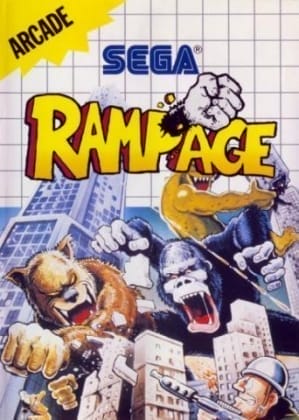
Rampage
Rampage is a 1986 actionvideo game developed and published by Bally Midway for arcades.#cite_note-13) Inspired by monster films, players control a trio of monsters: George, Lizzie, and Ralph, humans transformed into creatures due to various experimental mishaps. The goal is to destroy cities and combat military forces while staying alive. The game is set across 128 days in cities throughout North America, with each cycle repeating five times. Gameplay includes destroying buildings, eating humans, and avoiding damage. Rampage spawned ports to various home consoles and computers, as well as five sequels "Rampage (franchise)") and a 2018 film adaptation "Rampage (2018 film)").#cite_note-14)Warner Bros. owns all rights to the property via their purchase of Midway Games.
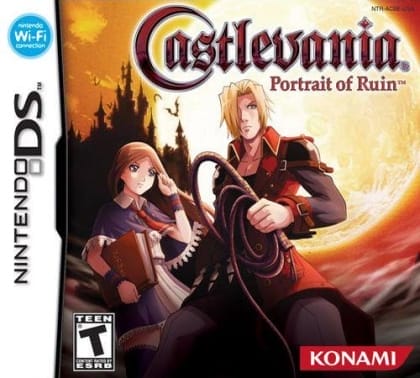
Castlevania: Portrait of Ruin
Castlevania: Portrait of Ruin is a 2006 action role-playing game developed and published by Konami for the Nintendo DS handheld system. The game is the first in the Castlevania series to feature a cooperative multiplayer gameplay mode and the first handheld entry to have English voice-overs, outside of its original Japanese release. The game is a continuation of the events from Castlevania: Bloodlines, a 1994 Sega Genesis title. Set in Europe during World War II, the story follows Jonathan Morris, the son of John Morris from Castlevania: Bloodlines, and Charlotte Aulin as they attempt to stop a vampire from resurrecting Dracula. The game expands on the two character gameplay found in Castlevania: Dawn of Sorrow and adds new cooperative online functionality while foregoing much of the mechanics involving the Nintendo DS touch screen. Portrait of Ruin received an overall positive critical response and several awards as one of the best Nintendo DS games.
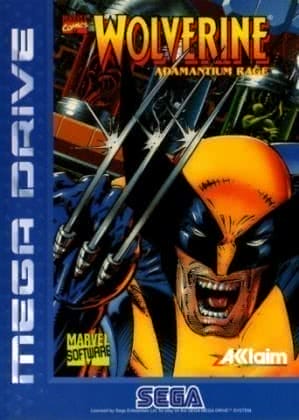
Wolverine: Adamantium Rage
GamePro panned the Genesis version, criticizing the generic design, lack of excitement, and most especially the controls, which they said are so poor that even clearing the first level is almost impossible. They concluded, "when the highlights of a game are its mediocre graphics and sounds, that should trigger an immediate red flag".Electronic Gaming Monthly gave it a 4.25 out of 10. Though their four reviewers were divided about the game's graphics, they unanimously commented that the controls are remarkably poor. Two of them also complained about the number of "instant hits".Next Generation "Next Generation (magazine)") reviewed the Genesis version of the game, rating it two stars out of five, and stated that "Wolverine is a decent platform brawler, but in the end it's just another platform brawler. And around here that's only good for two".
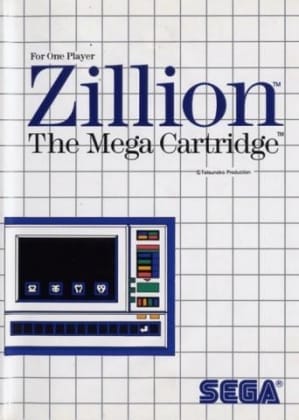
Zillion
Zillion, known as Akai Koudan Zillion (赤い光弾ジリオン; lit. Red Photon Zillion) in Japan, is a space adventure platform video game developed by Sega and designed for the Master System as a companion tie-in for Tatsunoko Production's Zillion anime series in 1987. The Zillion series prominently features Sega's egg-shaped mascot, Opa-Opa, who stars in the Fantasy Zone games, which are also available for the Master System. A sequel to the game, Zillion II was released in 1988.
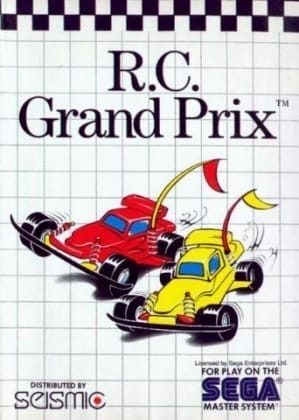
R.C. Grand Prix
R.C. Grand Prix is an isometric racing game. Depicting 1:10 off-road racing, the player controls a radio-controlled buggy and races against three other cars to become the grand champion. The player has to play through 10 increasingly difficult stages and buy new parts for the controlled car from the prize money awarded from each stage. If the player is placed last in a stage or does not complete the stage within the time-limit, the game is over. It is possible to play this game in multi-player mode with up to four players. The players play through each stage, one at a time, and the order of play is based on the current standings in the game. The game also features a drag race bonus stage which is only available in multi-player mode. Here, two players race each other for some bonus prize money.
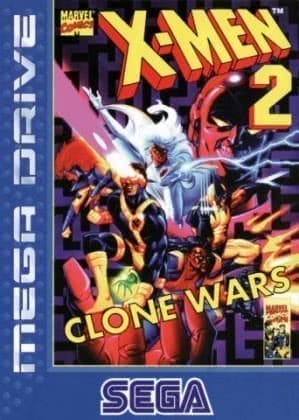
X-Men 2: Clone Wars
X-Men 2: Clone Wars is a 1995 2D action-platformervideo game developed by Headgames and released by Sega of America for the Mega Drive/Genesis as a sequel to the 1993's X-Men "X-Men (1993 video game)"). The game is based on the adventures of the Marvel Comics superhero team, the X-Men. A sequel, titled X-Women, was cancelled. The game begins with a cold open; upon booting up the console, the first stage begins with the player character being randomly selected from the roster. Completing the first stage prompts the appearance of the title sequence and opening narration. In most stages, the player must traverse environments populated with enemies and hazards and reach the exit. Some stages require the player to fight and defeat a boss enemy to proceed; minor boss fights occur at the end of the stage, while major boss fights comprise stages in their entirety.
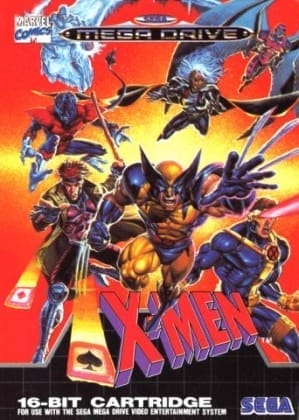
X-Men
In 2011, IGN named the game in its "Fifteen Really, Really, Really Hard Games" list, citing "unfairly placed enemies, ridiculously annoying jumps and near-impossible-to-beat bosses", as well as the need to lightly press the Genesis' reset button in "Mojo's Crunch".#cite_note-IGN-4) The requirement to reset effectively means the game cannot be completed on a Genesis Nomad. Power Unlimited gave X-Men a score of 82% writing: "X-Men for the Megadrive is a platform game with an original approach. It's basically a platform, tactics, fighting and strategy game all in one. The game is therefore extremely extensive and varied. A true must for superhero fans."#cite_note-5) The game was ranked number 7 on GameTrailers' "Top 10 X-Men Games" list.
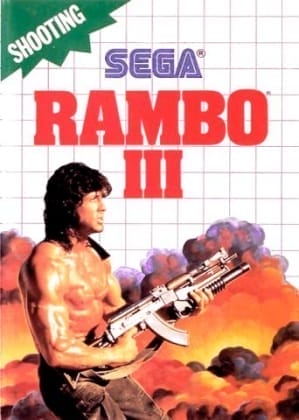
Rambo III
Rambo III is a series of video games based on the film Rambo III (1988). Like in the film, their main plots center on former Vietnam-eraGreen Beret "Special Forces (United States Army)")John Rambo being recalled up to duty one last time to rescue his former commander, Colonel Sam Trautman, who was captured during a covert operation mission in Soviet-controlledAfghanistan. Taito released an arcade video game based on the film. The console versions were developed and published by Sega, the IBM PC compatible version was developed by Ocean and published by Taito, and Ocean developed and published the other home computer versions: Atari ST, Amiga, Spectrum, C64, Amstrad CPC.
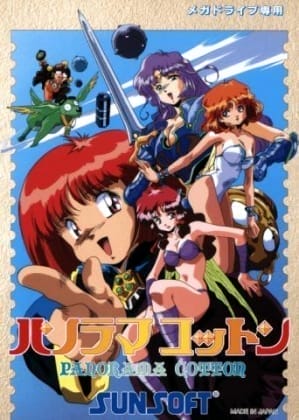
Panorama Cotton
Panorama Cotton is a 1994 rail shooter video game developed by Success and published by Sunsoft for the Mega Drive exclusively in Japan on August 12, 1994. Panorama Cotton is the third entry in the Cotton series and made a major departure from the original gameplay formula of prior Cotton entries; instead of being a side-scrolling shooter like the others, it is a pseudo-3D shooter in the style of Sega's Space Harrier. Panorama Cotton is a pseudo-3D scrolling shooter reminiscent of Space Harrier, set in an anime-style fantasy world. Various levels scroll "into the screen", vertically, horizontally, or diagonally. The player can move Cotton over the screen, shooting at oncoming enemies and avoiding obstacles in her way. Cotton can upgrade her weapon to higher levels as the player progresses, and can also cast magical spells by collecting special items. The most important plot elements in all of the Cotton games are magical candies called Willows.
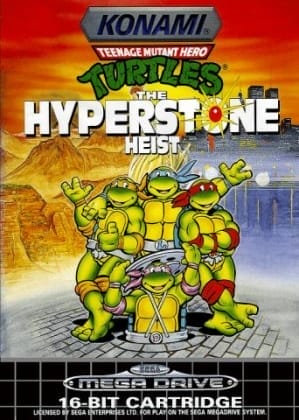
Teenage Mutant Ninja Turtles: The Hyperstone Heist
Teenage Mutant Ninja Turtles: The Hyperstone Heist, released in Europe as Teenage Mutant Hero Turtles: The Hyperstone Heist and in Japan as Teenage Mutant Ninja Turtles: Return of the Shredder, is a 1992 beat 'em up game developed and published by Konami for the Sega Genesis, based on the Teenage Mutant Ninja Turtles comic book characters. It was Konami's debut title for the Genesis. The game was re-released as part of Teenage Mutant Ninja Turtles: The Cowabunga Collection in 2022. April O'Neil is reporting from Liberty Island when, in a sudden flash of light, she and her audience witness Manhattan Island suddenly starting to shrink. Shredder then hijacks the airwaves and announces to the world that this was only a demonstration of the power of the Hyperstone, the treasure of Dimension X "Dimension X (Teenage Mutant Ninja Turtles)"). With the Hyperstone in his possession, he now has the power to take over the world. The Turtles have no choice but to go after Shredder and stop him.
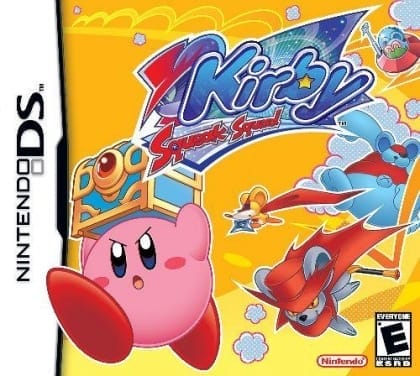
Kirby: Squeak Squad
Kirby: Squeak Squad is a 2006 platform game developed by HAL Laboratory and Flagship and published by Nintendo for the Nintendo DS. It is one of the mainline installment entries of the Kirby series and the second Kirby game released for the system. The game was released in Japan and North America in 2006 and in Europe, Australia, and South Korea in 2007. The game was later re-released for the Wii U's Virtual Console on June 25, 2015.
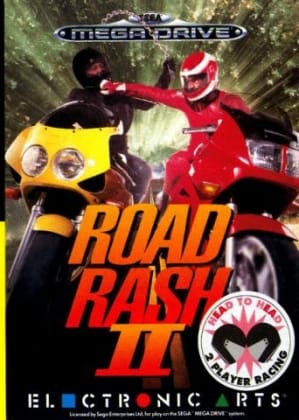
Road Rash II
Road Rash II is a 1992 racing and vehicular combat video game developed and published by Electronic Arts (EA) for the Sega Genesis. The game is centered around a series of motorcycle races throughout the United States that the player must win to advance to higher-difficulty races, while engaging in unarmed and armed combat to hinder the other racers. It is the second installment in the Road Rash series and introduces a split-screen two-player mode for competing human players, nitrous oxide charges on certain bikes, and chains as offensive weapons. EA began development of Road Rash II before the end of the 1991 Christmas season, and the game was released before the end of the 1992 Christmas season. Road Rash II met with critical acclaim and commercial success, with reviewers appreciating the visuals and addition of the multiplayer mode while pointing out the lack of innovation in the fundamental gameplay.
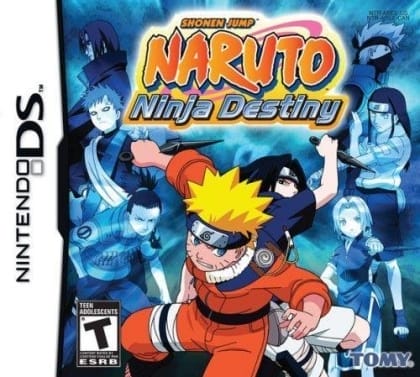
Naruto: Ninja Destiny
Naruto: Ninja Destiny, known in Japan as Naruto: Shinobi Retsuden (NARUTO(ナルト) 忍列伝; lit. "Naruto: Shinobi Legend"), is a fighting game developed by DreamFactory for Nintendo DS in 2006–2008. It is the first game in the Naruto: Ninja Destiny series. The North American and European versions have a different story. The original story from the Japanese version (with a new storyline added) was published in Europe as its own version of Ninja Destiny 2. The game features 16 playable characters (including 3 extra characters for North American and European versions).
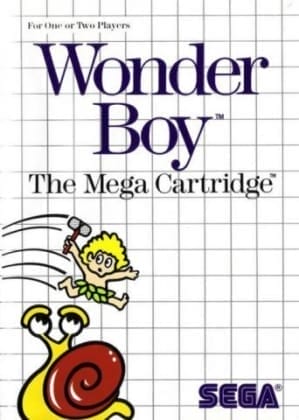
Wonder Boy
Wonder Boy is a 1986 platform game developed by Escape and published by Sega for arcades. It was later ported to the SG-1000, Master System and Game Gear video game consoles by Sega, and to the ZX Spectrum, Commodore 64 and Amstrad CPC home computers by Activision. The game is also known as Super Wonder Boy (スーパーワンダーボーイ, Sūpā Wandā Bōi) for its Sega Mark III release in Japan and Revenge of Drancon for its Game Gear release in North America. A high definition remake of the game, titled Wonder Boy Returns, was developed by CFK and released on Steam on October 12, 2016. It was the first in the long-running Wonder Boy series of games and was followed up by five sequels, Wonder Boy in Monster Land, Wonder Boy III: Monster Lair, Wonder Boy III: The Dragon's Trap, Wonder Boy in Monster World and Monster World IV. The game was also adapted by Hudson Soft as Adventure Island, which spawned its own series of games.
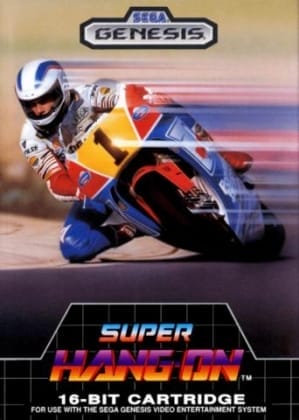
Super Hang-On
Super Hang-On is a 1987 racing video game developed and published by Sega for arcades. It is the sequel to 1985's Hang-On, and uses a simulated motorcycle arcade cabinet, like the original game. An updated version was released for arcades as Limited Edition Hang-On in 1991.
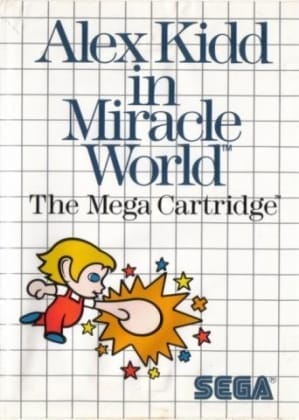
Alex Kidd in Miracle World
Alex Kidd in Miracle World is a 2D platform game. The player must finish levels and overcome obstacles and puzzles in both scrolling and single-screen environments. Throughout the 17 stages, Alex faces many monsters and the three henchmen of Janken the Great, before facing Janken himself. Alex's punching ability is used to destroy enemies and to break rocks in order to access new paths and to collect items such as money which can then be used to purchase other items including vehicles such as motorbikes and helicopters. At the end of many stages, Alex plays jan-ken-pon (rock-paper-scissors) with one of Janken's henchmen. Alex dies with one hit, or by losing a game of rock, paper, scissors. The game has no save system, but by holding the directional pad up and pressing the 2 button eight times at the Game Over screen, the player will restart the level with three new lives, at a cost of 400 Baums (the in-game currency).
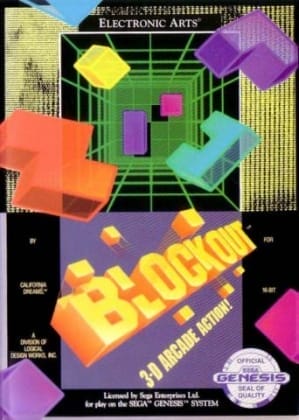
Blockout
Blockout is a puzzle video game published in 1989 by California Dreams. It was developed in Poland by Aleksander Ustaszewski and Mirosław Zabłocki. American Technos published an arcade version. Blockout is a 3D version of the Tetris concept.
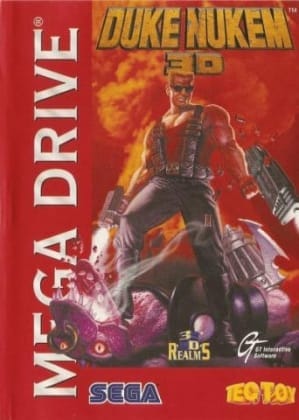
Duke Nukem 3D
Duke Nukem 3D is a 1996 first-person shooter game developed by 3D Realms and published by FormGen for MS-DOS. It is a sequel to the platform games Duke Nukem and Duke Nukem II, published by 3D Realms. Duke Nukem 3D features the adventures of the titular Duke Nukem, voiced by Jon St. John, who fights against an alien invasion on Earth. Along with Wolfenstein 3D, Doom and Quake, Duke Nukem 3D is considered to be responsible for popularizing first-person shooters, and was released to major critical acclaim. Reviewers praised the interactivity of the environments, gameplay, level design, and unique risqué humor, a mix of pop-culture satire and lampooning of over-the-top Hollywood action heroes. However, it also incited controversy due to its violence, erotic elements, and portrayal of women. Since its release, Duke Nukem 3D has been cited as one of the greatest video games ever made.
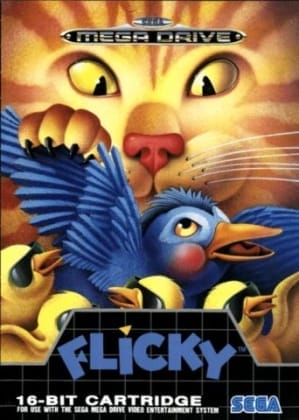
Flicky
Flicky is a platform game developed by Sega and released as an arcade video game in May 1984. It was licensed to Bally Midway for distribution in the United States. In Flicky, the player controls the eponymous blue bird and must gather all the small birds called Chirps in each round and bring them safely to the exit. There are cat and lizard enemies which can disperse the Chirps and kill the player, but Flicky can use items on the playing field to protect herself and the Chirps from danger. The idea for Flicky came from Sega senior leadership, who wanted to exceed the success of Namco's Mappy (1983). Yoji Ishii and Yoshiki Kawasaki developed Flicky at Sega over one year. Originally, the game simply had the player catch ambiguous dots in a maze. Taking inspiration from a popular song in a Japanese variety show, Kawasaki gave the game an urban theme and bird characters. The game was originally titled "Busty", then "Flippy", before finally settling on "Flicky".
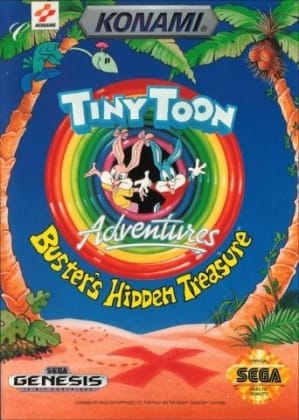
Tiny Toon Adventures: Buster's Hidden Treasure
Tiny Toon Adventures: Buster's Hidden Treasure is the first Tiny Toon Adventures-based game released on the Sega Genesis. It was released in 1993 and developed and published by Konami. The game was not released in Japan, but was released in South Korea, where it was simply called Tiny Toons Adventures.
Browse our collection of 456 Games retro games, all playable instantly in your browser. No download required. Play classic games online in your browser and save your progress anytime.